Practical
Where to Stay in Hallstatt: The Village, Lahn, Obertraun and Bad Goisern
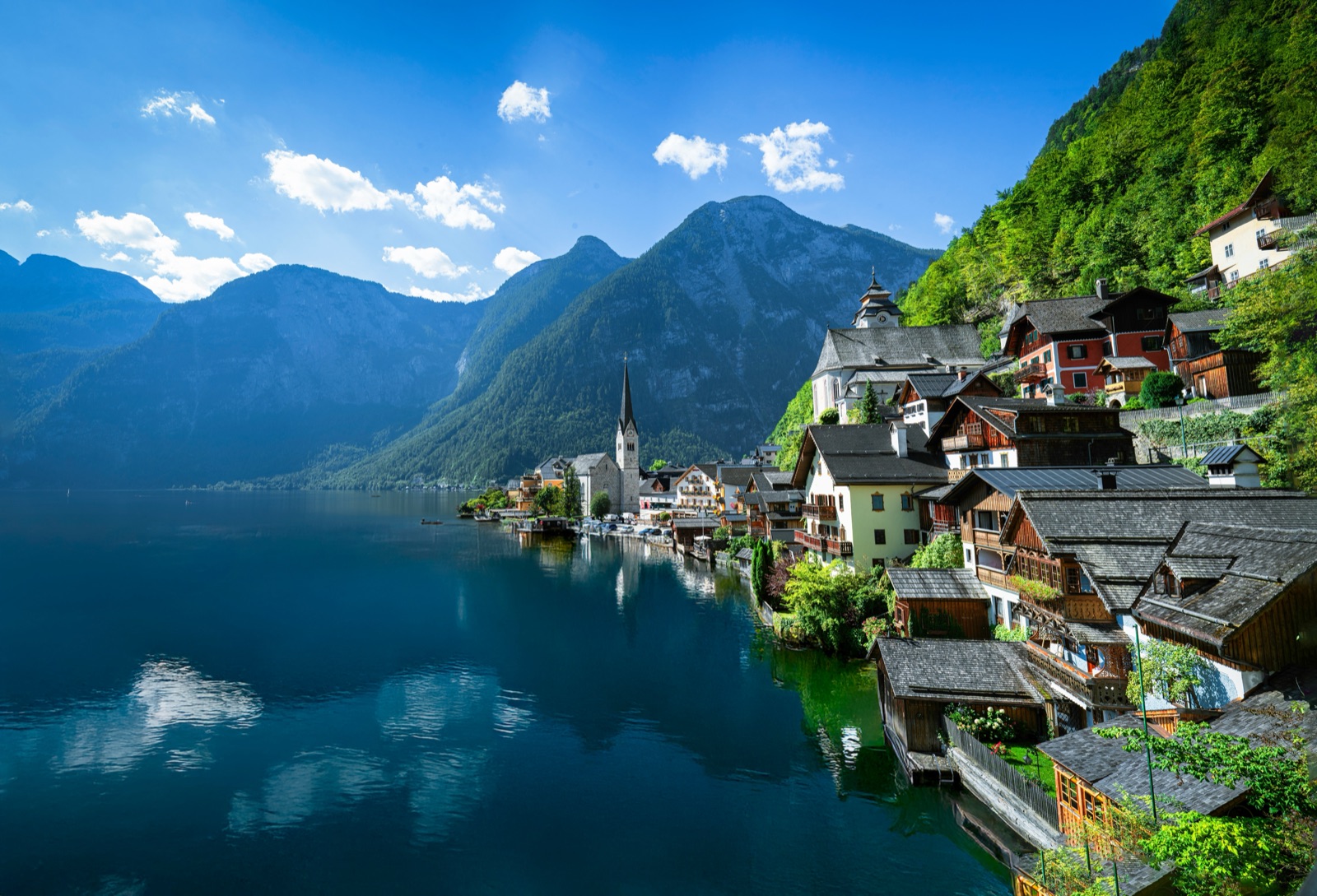
The best place to stay for Hallstatt is Hallstatt itself, if you can find a room and do not mind leaving the car at the edge of the village. The old centre is closed to traffic, so guests park at car park P1 in the Lahn district and a shuttle takes them and their luggage to their accommodation. The next best bases are close by. Lahn, at the southern end of the village, has the bus terminal. Obertraun, five kilometres on, sits at the foot of the Dachstein cable car. Bad Goisern, at the north end of the lake, has the shops, and Gosau and Bad Ischl, about 20 kilometres away, suit a longer stay or a car.
Whichever you choose, a night in the area changes the visit. This article covers why staying over is worth it, what living in the car-free centre involves, each base and how it links to the village, the kinds of accommodation, the tourist tax and guest cards, and when to book.
The short answer
| Base | Where it is | Getting to the old village | Best for |
|---|---|---|---|
| Hallstatt centre | The old village by the market square | On foot | The village early and late, no daily commute |
| Lahn | The southern end of the village | On foot, 5 to 20 minutes from the car parks to the sights | Arriving by bus or car |
| Obertraun | About five kilometres south, at the end of the lake | Bus, boat or train and ferry | The Dachstein, families, swimming |
| Gosau | About 20 kilometres west, up the Gosau valley | Bus with a change at Gosaumühle | Lake Gosau, walking, skiing at Dachstein West |
| Bad Goisern | The northern end of the lake | Bus, train and ferry, or boat in summer | Shops, the east-shore path, self-catering |
| Bad Ischl | About 20 kilometres north | Bus in about 40 to 50 minutes | A town base, connections, the wider Salzkammergut |
Why stay the night at all
Hallstatt is small and its visitors are many. NBC News reported in 2023 that the village has about 750 permanent residents and often more than 10,000 visitors a day, and the village’s own site counts over half a million visitors a year. Residents told NBC that US tourists tend to stay overnight while many others come on a day trip.
Staying over gives you the hours the day trippers miss. You can walk the lakefront before the first buses arrive and after the last ones leave. You can also be first in the queue for the salt mine funicular or the Dachstein cable car. The regional transport association has said the 09:16 and 10:16 buses from Bad Ischl towards Hallstatt are regularly full from the very first stop, and that the crush gets even worse in summer. Being in the area already takes those buses out of your plans.
There is also the matter of manners. Hallstatt is a place where about 750 people live, not an open-air museum, and the village asks visitors to speak quietly and stay off private property. Drones are not welcome either, because they invade residents’ privacy.
Staying in the old village: cars, parking and luggage
The centre of Hallstatt is closed to traffic during the day behind two barriers, and even hotel guests may not drive through. If you are staying there, the arrangement is the same whichever hotel or guesthouse you book:
- Park at P1. The car park was built for guests staying in the centre, who can leave their cars there for the whole stay. It is in the Lahn district, and the traffic guidance system leads you to it.
- Register at the shuttle point. Take a ticket as you drive in, then go to the hotel-shuttle info point near the entrance and tell the attendant where you are staying. If nobody is there, the call system brings the shuttle.
- Let the shuttle take your bags. It takes you and your luggage to your accommodation, and back to your car when you leave. Your host or the driver gives you the timetable.
- Convert your ticket. Before you first drive out of P1, press the hotel-ticket button at the ticket machine and pay. If you leave on an ordinary short-stay ticket, you pay the more expensive day rate.
- Ask your host about the details. The village’s parking page recommends contacting your host before you arrive. The Heritage.Hotel, for example, charges its overnight guests €20 per 24 hours at P1, and its shuttle is free at check-in and check-out, every 30 minutes from 9 a.m. to 7 p.m. Dogs are not allowed on its shuttle.
Guests staying outside the centre park at their accommodation instead. Only a few places in the village have their own parking. The village’s listing describes the private parking spaces of Pension Bergfried, at the foot of the Salzberg, as a rarity in the village.
Arriving without a car? The train and ferry land you at Hallstatt Markt, in the middle of the village, and the ferry Stefanie has wheelchair-accessible boarding. Luggage can currently be stored at the valley station of the salt mine funicular. The guide to getting to Hallstatt covers every route in.
Hotels and guesthouses in the village
The village’s own accommodation listing for Hallstatt includes, among others:
- The Heritage.Hotel Hallstatt, a 4-star hotel spread over three listed buildings with 56 rooms. The main Kainz house has a lift and views over the market square and the lake. The Stocker house, the oldest building in the village, is a 3-minute walk away and has no lift. The Seethaler house is about a 5-minute walk away and has a lift.
- The Lakeside Hotel Hallstatt, listed as Hotel Grüner Baum, on the market place.
- Seewirt Zauner, run by the same family for 4 generations, in a corner of the market square.
- Gasthof Weißes Lamm, in the historic centre, away from the main road and close to the lake.
- Pension Bergfried and Gasthof Pension Grüner Anger, at the foot of the Salzberg near the funicular. Bergfried is 150 metres from the lake, and Grüner Anger is five minutes’ walk from the centre.
Two practical points apply to all of them. Not every old building has a lift, the Heritage.Hotel’s Stocker house among them, so ask before you book if stairs are a problem. And because the village is so small, the walk from P1 to the sights takes only 5 to 20 minutes, so the choice is more about the view and the house than the location.
Lahn: the southern end of the village
Lahn is where road traffic arrives. The bus terminal stands at the southern entrance of the village, by the exit of the bypass tunnel, and car park P1 is in the same district. The southern round-trip boats call at Hallstatt Lahn as well as at the market.
For a stay, Lahn’s advantage is the short distance to the bus and the car park, which matters with luggage or an early bus to catch. If the salt mine is the priority, the inns near the funicular at the foot of the Salzberg are the other handy choice for an early start, and the salt mine and Skywalk guide has the tickets and hours.
Lahn also has a long history of its own. The Romans built a large settlement by the lake here, and the Hallstatt diving station is at Lahn today.
Obertraun: the Dachstein end of the lake
Obertraun lies about five kilometres from Hallstatt, at the southern end of the lake, and it is the base for the Dachstein. The Dachstein Krippenstein cable car starts here, with the Giant Ice Cave, the Mammoth Cave and the 5fingers platform above. It is covered in the guide to Hallstatt and the Dachstein.
Getting to Hallstatt from Obertraun is easy:
- By bus, lines 543 and 544 link the cable car valley station with the Hallstatt Lahn bus terminal in about 10 minutes, every hour.
- By train, Obertraun has its own station, Obertraun Dachsteinhöhlen, on the same line as Hallstatt station.
- By boat, in season the southern round trip calls at Obertraun (Haus am See), and a one-way ticket to Hallstatt costs €12.
Obertraun also has what the tourist board calls one of the most beautiful and well-kept lidos on the lake. Entry is free, and the lido is 100 m from the Obertraun Bahnhof/Feriendorf bus stop. It suits families and anyone staying for several days. For self-catering, Resort Obertraun, for example, has 59 chalets for four to ten people, takes bookings of at least three nights, and in summer rents them only by the week, Saturday to Saturday. Camper vans are directed to the car park in Obertraun rather than the Hallstatt car parks.
Gosau: the valley and the lake
Gosau lies up its own valley west of Hallstatt, and the Gosau lakes are about twenty kilometres away. Lake Gosau, with the Dachstein reflected in it, is the draw. The circular trail round the lake is open from May to October, and in winter Austria’s tourist board recommends the Dachstein West ski area at Gosau for families.
As a base for Hallstatt it is less direct. Bus 541 runs from Bad Ischl via Bad Goisern to Gosau, and for Hallstatt you change to bus 543 at the Gosaumühle stop. Gosau suits walkers, skiers and anyone who wants mountain quiet more than lakeside evenings. The Salzkammergut lakes and towns article covers the place itself.
Bad Goisern: shops and the east shore
Bad Goisern sits at the northern end of Lake Hallstatt, and it has practical advantages for a longer stay. The village’s own website says Bad Goisern has the best shopping in the area, with many supermarkets, which matters if you are self-catering.
It also has easy access to the lake. There is a lido at Untersee, the east-bank trail and cycle path start here and run past Hallstatt station to Obertraun, and the railway stops at Steeg-Gosau and Obersee on the way to Hallstatt station. In high summer, from 18 July to 16 August, the northern round-trip boats run between Hallstatt, Untersee and Steeg, and a one-way ticket costs €15 for adults. Outside those weeks, the bus or the train and the ferry are the ways in.
Bad Ischl: a town base
Bad Ischl is 20 kilometres from Hallstatt, about 20 minutes by car, and it is the region’s transport hub. Buses from Salzburg end here, and the onward bus to Hallstatt takes about 40 to 50 minutes. The town itself, with the emperor’s Kaiservilla, is worth a day.
The catch is the evening. The last bus towards Hallstatt leaves Bad Ischl station at 18:16, so dinner in Hallstatt means driving or a taxi home. Bad Ischl works best for travellers who want to combine Hallstatt with the Wolfgangsee, Salzburg or the wider Salzkammergut, and who are happy to treat Hallstatt as a day trip with an early start.
Hotels, guesthouses, rooms and farms
Accommodation around the lake comes in every form, from an elegant 5-star hotel to a guesthouse, a family apartment or a traditional farm, in the village’s own words. Two rating systems are in use:
- Stars, for hotels and inns, on the international scale.
- Edelweiss flowers, which some hosts around the lake are awarded instead: from two to four, and the more flowers, the more comfort you can expect.
Beyond the hotels in the village there are guesthouses, holiday apartments, farm stays and campsites around the lake; the village’s site lists campsites in Obertraun for motorhomes, caravans and tents. Check minimum stays as well as the price, since some chalets in Obertraun are let only by the week in summer.
The tourist tax and the guest cards
Every overnight stay carries a local tourist tax, the Ortstaxe. Since 1 October 2026 it is €4.00 per person per night in Bad Goisern, Gosau, Hallstatt and Obertraun. In Bad Ischl it is €3.80 from 1 November 2026. The host collects it from you and passes it to the municipality, and the regional tourist board says the money goes into leisure facilities, visitor management and transport. Guests are exempt until the end of the calendar year in which they turn 15.
Most hosts in the region include the tax in the price, but some charge it on top, so check your booking. Some hotel websites still give the older rate: the Heritage.Hotel’s FAQ, for instance, still lists €3 per night.
A stay of three nights or more also gets you a guest card:
- The SommerCard, valid from 1 May to 31 October, is free in all participating regions for stays of at least three nights. It gives up to 25% off more than 120 attractions and activities in the Salzkammergut.
- The WinterCard, valid from 1 November to 30 April, is free in all regions for stays of at least three nights.
- Children under 15 do not need a card and get reduced rates with an adult who has one.
Ask your host for the card on arrival, and check which attractions you plan to visit accept it.
When to book
Booking ahead matters most at these times:
- Summer, when the regional transport association says the pressure on the buses gets even worse, and when some chalets in Obertraun are let only by the week.
- The Christmas market on 8 December 2026, a one-day event on the market square.
- The Corpus Christi procession on the lake, next held on 27 May 2027.
Two more things are worth arranging in advance. Check your arrival time against the last bus from Bad Ischl, 18:16, and against your host’s check-in hours. The Heritage.Hotel, for example, checks guests in from 3 p.m. And if you are driving and staying in the centre, ask your host about the shuttle before you set off.
Getting between your base and the village
- Bus: lines 542 and 543 arrive at the Hallstatt Lahn bus terminal. Bus 543 links Obertraun with Hallstatt, and bus 541 runs from Bad Ischl via Bad Goisern to Gosau, with a change to 543 at Gosaumühle.
- Train and ferry: the Salzkammergut Railway stops at Steeg-Gosau, Obersee, Hallstatt and Obertraun. From Hallstatt station, the ferry crosses to Hallstatt Markt for €4, cash only, and a ferry is ready for every train.
- Boat: in the season the southern round trip links Hallstatt Markt, Hallstatt Lahn and Obertraun, and NAVIA’s traditional Zille boats run between Obertraun and Hallstatt.
- On foot: the east-shore trail links Bad Goisern, Hallstatt station and Obertraun. From Hallstatt station, Obertraun is about an hour’s walk.
The boats and the lakeside paths are covered in more detail in the article on Lake Hallstatt.
Which base suits you
- One night, first visit, no car: the old village or Lahn. Arrive by train and ferry, and walk everywhere.
- Two or three nights with the Dachstein: Obertraun, or the village with a day trip by bus to the cable car.
- A family week with swimming: Obertraun or Bad Goisern, with a lido on the doorstep and room to self-cater.
- Walking and Lake Gosau: Gosau, with a car or a good grasp of the bus timetable.
- Touring the Salzkammergut: Bad Ischl, with Hallstatt as a day trip.
Once you have a base, the guide to things to do in Hallstatt helps you plan the days. If you only have a day, a tour from Salzburg or Vienna takes care of the transport instead: the guide to Hallstatt day trips compares them, and the tours page lists them.
Frequently asked questions
Can I drive to my hotel in Hallstatt?
No, not into the old centre. Guests staying in the centre park at car park P1 in the Lahn district, and a shuttle takes them and their luggage to their accommodation and back on departure. Guests staying outside the centre park at their accommodation.
How much is the tourist tax in Hallstatt?
Since 1 October 2026 the Ortstaxe is €4.00 per person per night in Hallstatt, Obertraun, Bad Goisern and Gosau. Guests are exempt until the end of the year in which they turn 15. Most hosts include it in the price.
Is it better to stay in Hallstatt or Obertraun?
Hallstatt gives you the village before and after the day visitors. Obertraun, about five kilometres away, is better for the Dachstein, swimming and self-catering, and it is 10 minutes from Hallstatt by bus.
What is the Heritage Hotel in Hallstatt?
The Heritage.Hotel Hallstatt is a 4-star hotel made up of three listed buildings in the old centre, with 56 rooms. Its Stocker house, the oldest building in the village, has no lift.
Is Bad Ischl a good base for Hallstatt?
It works for touring the Salzkammergut, but evenings are the catch. The bus to Hallstatt takes about 40 to 50 minutes, and the last one towards Hallstatt leaves Bad Ischl station at 18:16.
Do I get a guest card if I stay overnight?
Yes, for three nights or more. The SommerCard, from 1 May to 31 October, is free in participating regions, and the WinterCard, from 1 November to 30 April, is free in all regions for stays of at least three nights.