Places
Salzkammergut Lakes and Towns Near Hallstatt: Where to Go Next
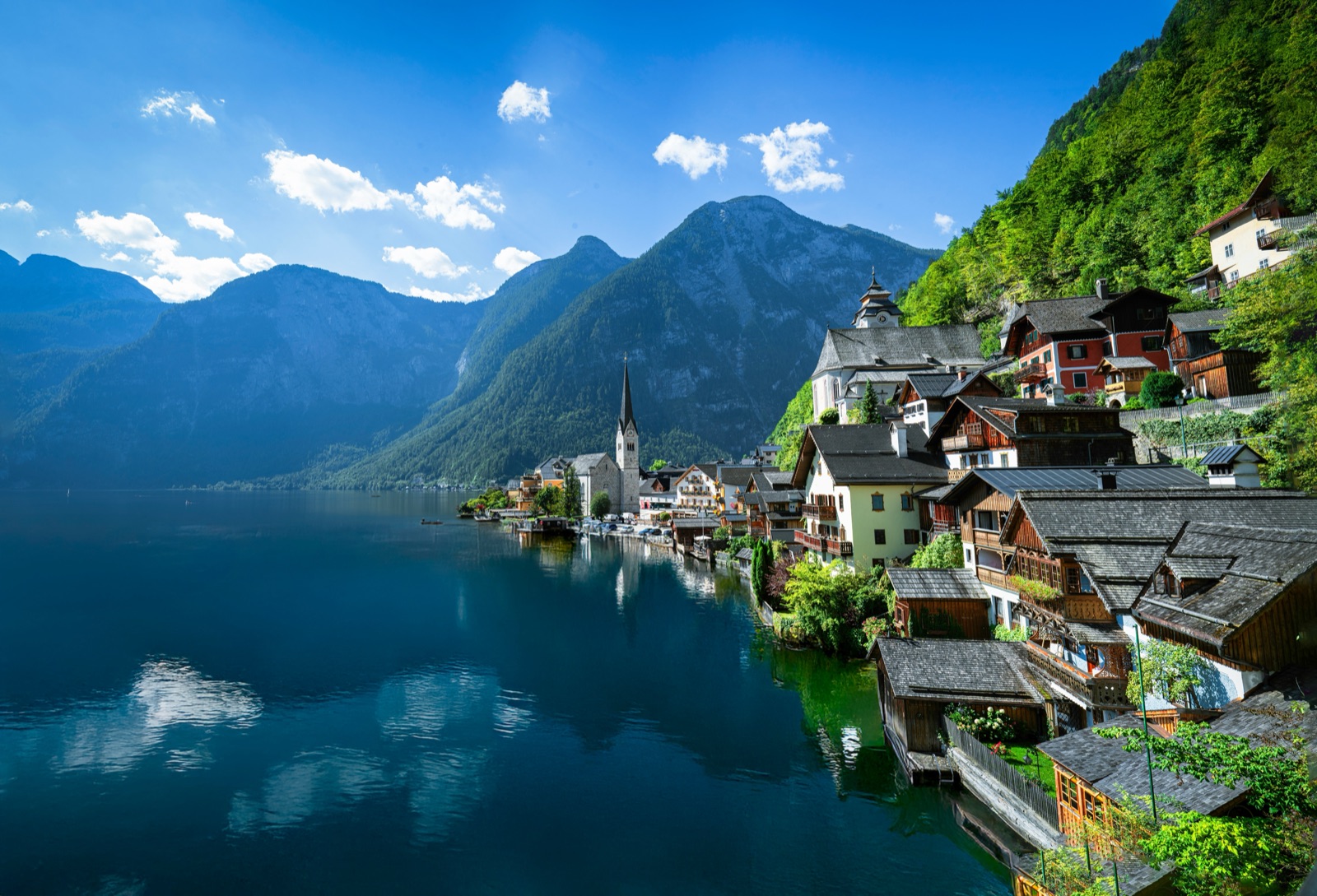
The Salzkammergut is the lake district of central Austria, a region of mountains and lakes that spans three provinces: Upper Austria, SalzburgerLand and Styria. Austria’s tourist board counts 76 lakes and eight holiday regions in it. Hallstatt sits in the south, in the Dachstein Salzkammergut region, and the name of the whole area comes from the same thing that made Hallstatt: salt, mined for centuries under the direct control of the Habsburg crown.
From Hallstatt, the nearest highlights are close. Obertraun is about five kilometres away; the Gosau lakes, Bad Ischl and Bad Aussee are all around 20 kilometres; the Wolfgangsee is about 30 kilometres and the Traunsee about 40. Mondsee, with its Sound of Music church, lies at the far side of the region, half an hour from Salzburg. Below is what each place is worth seeing for, how far it is, and how to reach it without a car.
The short answer
| Place | From Hallstatt | Go for |
|---|---|---|
| Obertraun | about five km | The Dachstein cable car and caves, the lido |
| Gosau and Lake Gosau | about 20 km | The Dachstein reflected in a mountain lake |
| Bad Ischl | 20 km, about 20 minutes by car | The imperial villa, the spa town, the bus hub |
| Bad Aussee and Altaussee | 20 km to Bad Aussee; the Loser at Altaussee 18 km | Styrian lakes, a salt mine with a wartime art story |
| Wolfgangsee and St Wolfgang | about 30 km | The Pacher altar, the Schafberg cog railway |
| Traunsee and Gmunden | about 40 km | Austria’s deepest lake, ceramics, the island castle |
| Mondsee | beyond the Wolfgangsee, 30 minutes from Salzburg | The Sound of Music wedding church |
The distances are those published by a hotel in Hallstatt and are approximate. Check your own route before you set off, especially in winter.
What “Salzkammergut” means
The name breaks into two parts: Salz, meaning salt, and Kammergut. The Natural History Museum Vienna (NHM) explains a Kammergut as land under the immediate control of the sovereign, administered by his chamber of finance. In other words, the Salzkammergut was the salt estate of the Habsburg treasury. Bad Ischl’s town history says the name was first used for the area around Ischl in 1656, for a region of particularly high economic value to the Habsburgs because of its salt.
That value bought the region unusual treatment. Until 1850, the NHM says, the Salzkammergut was almost a state within a state. It was exempt from taxes and duties and from billeting soldiers, salt workers were exempt from military service, and the salt authority, answerable only to the court chamber in Vienna, provided early forms of welfare, from wedding bonuses to free medical treatment.
The salt also had to move. By the end of the sixteenth century the forests around the Hallstatt mines were running short of the wood needed to boil brine, so a new saltworks was planned at Ebensee on the Traunsee, fed by a 40 km brine pipeline. Bad Ischl’s town chronicle dates its construction to 1613. The landscape that salt created is why UNESCO inscribed the Hallstatt-Dachstein / Salzkammergut Cultural Landscape on the World Heritage List in 1997.
For the prehistoric side of the story, see our article on the Hallstatt culture.
Lake Hallstatt itself
Before going further, the lake at your feet is worth knowing. The regional tourist board gives Lake Hallstatt as 7.75 km long and up to 2.3 km wide, with a maximum depth of 125 m and an area of 8.55 km². It is fed by the Traun, the Gosaubach, the Waldbach and the Zlambach, drains through the Traun, and belongs to the Austrian Federal Forests. Three communities share its shores: Bad Goisern at the northern end, Hallstatt on the western side and Obertraun in the south.
- Swimming. The bathing areas and lidos around the lake are free to use, with lidos at Bad Goisern (in the Untersee district) and at Obertraun. The water ranges from 1 degree in winter to up to 24 degrees in summer.
- Walking. The east bank hiking trail runs from Bad Goisern to Obertraun, passing Hallstatt station, from where the ferry crosses to the village.
- Boats. The ferry, the round trips and boat hire are covered in our guide to Hallstatt and the Dachstein.
Obertraun: the southern end of the lake
Obertraun lies about five kilometres from Hallstatt, at the southern end of the lake, and it is where the Dachstein Krippenstein cable car starts. Most visitors come for the Giant Ice Cave, the Mammoth Cave and the viewing platforms high on the Krippenstein, all covered in our Dachstein guide. Staying in Obertraun puts you at the foot of the cable car, with a lido on the lake and the southern end of the east bank trail on your doorstep.
Gosau and Lake Gosau
Lake Gosau, the Vorderer Gosausee, is the picture many people have in mind when they think of the Salzkammergut: a small, still lake with the Dachstein glacier reflected in it. The naturalist Alexander von Humboldt is said to have called it the Eye of God. It lies at 937 metres at the head of the Gosau valley, about twenty kilometres from Hallstatt.
- The water. The lake is a protected nature reserve, with very cold, clear water of drinking quality.
- The dam. Few visitors know that the lake was dammed in 1913, raising it by about 12 m. It serves as a reservoir for a power station that supplies about 2,200 households and as a flood basin, and its level is lowered every autumn.
- The walk. A circular trail runs round the lake, open from May to October. From the far end, the walk on past the Gosaulacke, a pool that fills only in snowmelt or heavy rain, to the Upper Lake Gosau takes about 1.5 hours.
- The cable car. The Gosaukamm cable car starts 50 metres from the lake and rises to the Zwieselalm, a high pasture with a wide panorama.
The three lakes work in an unexpected way. The Upper Lake is not the everyday source of the lower one: its water normally drains through underground springs into the Gosaubach, and only in snowmelt or after heavy rain does it overflow into the Gosaulacke and from there into Lake Gosau. That is why the tourist board calls the middle pool an episodic lake: it comes and goes with the weather.
By bus, line 541 runs from Bad Ischl via Bad Goisern to Gosau and the lake. Buses from Hallstatt (line 543) connect with it at the Gosaumühle stop, where the road to Hallstatt leaves the valley road. In winter the circular trail is closed; see our article on Hallstatt in winter.
Bad Goisern: crafts at the north end of the lake
Bad Goisern sits at the northern end of Lake Hallstatt, on the road towards Bad Ischl, and its draw is craft. The Hand.Werk.Haus presents the region’s master artisans and sells their work, including the legendary Goisern shoes, along with loden blankets, hats and spirits.
The village also keeps one of the Salzkammergut’s living customs. The Goisern Perchtenlauf is among 14 traditions in the region that are recognised as UNESCO intangible cultural heritage, alongside historic log rafting and the Liebstatt Sunday in Gmunden. If you are walking the east bank trail, Bad Goisern is its natural northern start.
Bad Ischl: the emperor’s summer town
Bad Ischl, 20 kilometres from Hallstatt or about 20 minutes by car, is the region’s centre and its main transport hub. It became a fashionable spa town in the 1820s, after doctors began sending patients for cures, and the first brine baths were given in 1823. The town’s history credits the spa success of Archduchess Sophie and her husband Franz Carl with turning Ischl into one of the most popular health resorts of the monarchy, and grand hotels and country houses followed.
Its fame comes from one family. From 1849 to 1914 Ischl was the summer residence of Emperor Franz Joseph I. He became engaged to Elisabeth, the empress known as Sisi, in the town in 1853, and the couple were given a villa as a wedding present. In that villa, the Kaiservilla, Franz Joseph wrote his manifesto to his peoples on 28 July 1914, declaring war on Serbia, the step that began the First World War.
- The Kaiservilla can be seen only on a guided tour of about 45 minutes. The park around it holds the Marmorschlössl, Empress Elisabeth’s former tea house.
- Culture. Bad Ischl held the title of European Capital of Culture 2024.
- Transport. Bad Ischl is where buses from Salzburg meet those for Hallstatt and Gosau, and the bus from Bad Ischl to Hallstatt takes about 40 to 50 minutes.
The Ausseerland: Bad Aussee and Altaussee
East of Hallstatt, over the Koppen road from Obertraun, the Salzkammergut continues into Styria as the Ausseerland. Bad Aussee is 20 kilometres from Hallstatt, about 30 minutes by car. It is known for traditional costume and for the Narzissenfest, a narcissus festival held every spring since 1959 that draws around 20,000 visitors.
Altaussee, with its own lake and the Loser ski area, has a salt mine with one of the region’s most remarkable stories. Its operator calls it the biggest active salt mine in Austria, with mining first recorded in 1147. From 1943 the Nazis hid looted European art in its tunnels, including Michelangelo’s Madonna from Bruges and the Ghent Altarpiece, and the rescue of those works at the end of the war inspired the film Monuments Men. A tour lasts around 90 minutes and covers about 2.5 kilometres on foot, and the mine stays at roughly 8 degrees all year, so bring a warm layer even in August. In winter, the Loser ski area at Altaussee is 18 kilometres from Hallstatt.
Wolfgangsee and St Wolfgang
The Wolfgangsee is about 30 kilometres from Hallstatt, beyond Bad Ischl, with three lakeside villages: St Wolfgang, Strobl and St Gilgen. A Hallstatt hotel calls it the most famous lake in the Salzkammergut, and the line 150 bus from Salzburg runs past it.
- The Pacher altar. St Wolfgang’s pilgrimage church, which dates back to at least the twelfth century and is still one of Europe’s important pilgrimage places, holds a Gothic winged altar that Michael Pacher completed in 1481. It is 12.5 m high and more than 6 m wide when open, with the Coronation of the Virgin carved at its centre.
- The SchafbergBahn. Austria’s steepest steam cog railway has climbed from St Wolfgang since 1893, covering 5.85 km and 1,190 m of ascent in about 35 minutes to the Schafberg, 1,783 m high. In 2026 it runs daily to the summit from 25 April to 1 November.
- On screen. The railway features in The Sound of Music, in the scenes where the von Trapp children spend a day near St Wolfgang.
Traunsee and Gmunden
The Traunsee, about 40 kilometres from Hallstatt, is Austria’s deepest lake at 191 metres. Gmunden, at its northern end, has a charming old town and is known for Gmundner ceramics. Its best-known sight is Schloss Ort, a castle on a tiny island in the lake with a second part on the shore, counted among the oldest buildings in the Salzkammergut; the town has owned the island castle since 1995.
The Traunsee has several links back to Hallstatt. Ebensee, on the Traunsee, is where the brine pipeline from Hallstatt ended. Iron Age finds from Hallstatt are closely tied to burials at Traunkirchen, on the lake, which the NHM thinks may have been a trading hub where Hallstatt salt was sold. And Ebensee is where the Glöckler custom began: every year on the evening of 5 January, figures in white robes with illuminated caps walk from house to house ringing bells to chase away evil spirits. UNESCO lists the tradition as intangible cultural heritage of Austria, and Glöckler now also run around the Wolfgangsee and in Bad Ischl.
Mondsee: the Sound of Music church
Mondsee lies on the Salzburg side of the Salzkammergut, about 30 minutes from the city, which makes it an easier trip from Salzburg than from Hallstatt. Its draw is the basilica of St Michael, where the wedding scene of Maria and Georg von Trapp in The Sound of Music was shot.
The church is far older than the film. The Bavarian Duke Odilo II founded a monastery here in 748, and the nave of the present late Gothic church was consecrated in 1487. At 70 metres long, 34 metres wide and 22 metres high, it is one of the largest architectural monuments in Austria, and it became a minor basilica in 2005. The tourist board lists it as open daily, with free entry and a donation requested towards its upkeep.
Hallstatt or Salzburg as a base?
Many visitors see the Salzkammergut as a day out from Salzburg, which is 70 kilometres from Hallstatt, about 1 hour 15 minutes by car. Which base suits you depends on which part of the region you want.
- Base in Salzburg for Mondsee, the Wolfgangsee and the Fuschlsee, which lie on the Salzburg side and are served by line 150 towards Bad Ischl.
- Base in Hallstatt or Obertraun for Lake Gosau, the Dachstein, the Ausseerland and Lake Hallstatt itself, all within about 20 kilometres.
- Bad Ischl sits in the middle. As the transport hub, with the Kaiservilla on the doorstep, it works as a base for both halves of the region.
Whichever you choose, an overnight stay near Hallstatt lets you see the lake early and late in the day, before and after the day trips.
Getting around without a car
- Bad Ischl is the hub. From there, buses reach Hallstatt, Obertraun and Gosau in about 40 to 50 minutes. Line 541 runs to Gosau, and Hallstatt passengers change to line 543 at Gosaumühle.
- Salzburg and the Wolfgangsee. Line 150 links Salzburg’s main station with Bad Ischl, running past the Fuschlsee and the Wolfgangsee every hour, at times every half hour.
- Watch the last bus. The last bus from Bad Ischl towards Hallstatt, Gosau, Obertraun and Bad Goisern leaves the station at 18:16. Miss it and you will need a taxi.
- The train. The railway runs along the east shore of Lake Hallstatt. Our guide to getting to Hallstatt covers the trains and the ferry from the station.
- A discount card. The SalzkammergutCard, sold for summer and for winter, gives 25% off many attractions in the region.
Which places suit which trip
- Half a day from Hallstatt: Obertraun and the Dachstein, or Lake Gosau. Both are close, and Gosau is at its best on a clear, still day.
- A full day by bus: Bad Ischl in the morning for the Kaiservilla, then on along line 150 to the Wolfgangsee for St Wolfgang and, in season, the SchafbergBahn.
- With a car or a second base: the Ausseerland, with Bad Aussee and the Altaussee salt mine, then back over the Koppen road.
- From Salzburg instead: Mondsee is closer to Salzburg than to Hallstatt, so fit it into a Salzburg day.
- In Advent: the Wolfgangsee, Bad Ischl, Gosau, Mondsee, Gmunden and Hallstatt itself all hold Christmas markets. Our article on Hallstatt in winter has the dates.
Frequently asked questions
What is the Salzkammergut?
It is a lake and mountain region in central Austria, spanning Upper Austria, SalzburgerLand and Styria, with 76 lakes in the tourist board’s count. Its name means the salt estate of the sovereign’s treasury, after the salt mined there under Habsburg control.
How far is Bad Ischl from Hallstatt?
About 20 kilometres, or around 20 minutes by car. By bus it takes about 40 to 50 minutes, and the last bus from Bad Ischl towards Hallstatt leaves at 18:16.
Is Lake Gosau worth visiting from Hallstatt?
Yes, especially on a clear day: it is about twenty kilometres away and gives the classic view of the Dachstein over the water. The circular trail round the lake is open from May to October.
Which is the biggest lake in the Salzkammergut?
The Attersee is the largest, according to Austria’s tourist board, and the Traunsee, at 191 metres, is the deepest lake in Austria. Lake Hallstatt is smaller, at 8.55 km², but reaches a depth of 125 m.
Where was the Sound of Music wedding filmed?
In the basilica of St Michael in Mondsee, about 30 minutes from Salzburg. The SchafbergBahn cog railway at St Wolfgang also appears in the film.