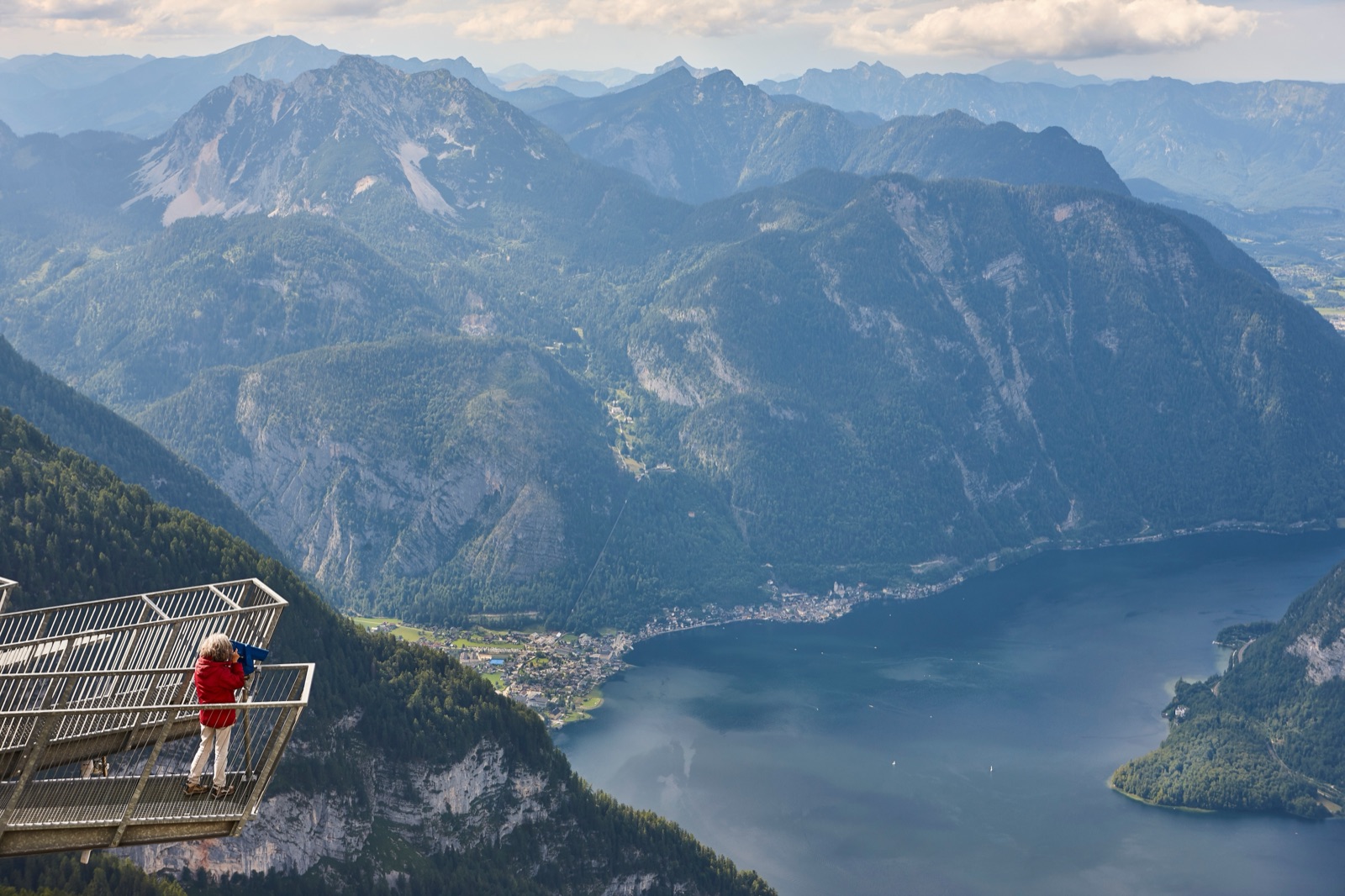
Lake Gosau from Hallstatt: Bus, Parking, the Lake Walk and the Zwieselalm
Lake Gosau, the Vorderer Gosausee, lies in the next valley west of Hallstatt, a twenty-kilometre trip from the village. It is the lake with the Dachstein glacier rising behind it, the view that put Gosau on the map. From Hallstatt you get there by bus with a change at the Gosaumühle stop, or by car in a short drive, parking in one of the paid car parks below the lake. Once there, the easy circuit of the lake takes about an hour and a quarter. The walk on to the Hinterer Gosausee makes a half day, and the Gosaukamm cable car lifts you to the Zwieselalm for the views from above. The lakeside trail is open only from May to October. Outside that season you can still visit the lake, but you look at it from the end of the road. This guide covers each step, with the 2026 prices.
Lake Gosau at a glance
| Height | 937 m |
| From Hallstatt | About twenty kilometres by road |
| Lake circuit | 4.7 km, about 1 hour 17 minutes, easy |
| On to the Hinterer Gosausee | About 1.5 hours one way |
| Circuit trail season | May to October |
| Nearest car park | P1 at the turning loop, short stays |
| Cable car | Gosaukammbahn, 50 metres from the lake |
| Food at the lake | Gasthof Gosausee; Holzmeisteralm at the upper lake in summer |
Why go: the eye of God
The naturalist Alexander von Humboldt called Lake Gosau the Eye of God. It lies at the foot of the Dachstein, the highest mountain in the Salzkammergut, and on a still morning the glacier is reflected in the water. The tourist board puts it simply: the view of the glacier rising behind the lake is what makes Gosau one of the top destinations in the region, alongside Hallstatt itself.
The lake is a protected nature reserve with very cold, clear water of drinking quality. It is also a working reservoir. It was dammed in 1913, raising the level by about 12 m, and the Gosau power station supplies about 2,200 households. The level is lowered every autumn. Late in the season you may see a wide stony margin rather than a brimming lake.
Getting there by bus
There is no direct bus from Hallstatt to the lake. You take bus 543 from Hallstatt to the Gosaumühle stop, at the junction where the Gosau road leaves the lakeside road, and change there. Hallstatt’s tourist board lists line 541 as the bus that runs from Bad Ischl via Bad Goisern to Gosau and Lake Gosau. The Gosau car park listing names bus 542 towards Gosausee, with rail travellers getting off at Steeg/Gosau station. Check the line number on the stop timetable on the day: both routes end at the lake. At Lake Gosau the bus stop is right by the water, and the car park is a few minutes’ walk away.
Two tips. First, note the last bus back before you set out, as the tourist board advises for every outing in the region. The last bus towards Hallstatt, Gosau, Obertraun and Bad Goisern leaves Bad Ischl station at 18:16, which gives you an idea of how early the evening service ends. Second, if you are staying in Hallstatt, combine the bus with the train: the Salzkammergut Railway stops at Steeg-Gosau, and bus connections from there head up the valley. For all the timetables into the area, see our getting there guide.
Getting there by car
From Hallstatt, drive north along the lake and turn off at the Gosaumühle junction towards Gosau. The road climbs through the village of Gosau to the end of the valley and the car parks below the lake. From Salzburg the direct route leaves the motorway at Golling and takes the B162 via Abtenau and the B166 to Gosau. Drivers coming from Vienna and Graz come through Obertraun and Hallstatt and turn left at Gosaumühle.
If you are driving to Gosau from Hallstatt, you avoid one of the hardest problems of a Hallstatt day: parking in the village itself. If you are coming from Salzburg, it can make sense to do Gosau first in the morning and Hallstatt in the afternoon, when the day coaches start to leave.
Parking at Lake Gosau
All the car parks at Lake Gosau charge. They run along the road between the valley cable car and the lake, and the closer you park, the more you pay.
- P1, at the turning loop. The closest car park, right next to the turning loop by the lake, with 134 spaces. It is meant for short stays and takes cars and buses only. Motorhomes and campervans may not use it. The tourist board lists €3 an hour for the first 3 hours, then €15 from the fourth hour. There are toilets, and electric-car charging for a fee.
- P4 and P5, further down. For longer hikes and mountain tours, the tourist board recommends parking at P4 or P5 and walking up.
Entry and exit are recorded by number plate, so there is no paper ticket to display. Pay at the machine, through the Parkster or EasyPark apps, or online up to 48 hours after you leave. Enter your number plate correctly. The Gosau municipality’s own parking page carries the current rates for every car park, and it is worth a look before you go, because the tariffs have been changing.
The walk round the Vorderer Gosausee
The classic thing to do at Lake Gosau is to walk round it. A route-planning site gives the circuit as 4.7 km, about 1 hour 17 minutes, with only 41 m of ascent, rated easy. It starts at the inn at the lake. The path runs through forest and along the shore. The classic picture, with the glacier behind the water, is from the inn’s end of the lake, the same view the inn’s garden looks out on.
The circular trail is open only from May to October. In winter and spring avalanches, snow and ice add to the rockfall risk, and the trail is not cleared of snow. Outside the season, enjoy the view from the end of the road and the inn’s terrace rather than setting off along the shore.
Allow longer than the walking time. Most people stop repeatedly for photographs, and on a sunny summer afternoon the path near the inn is busy. Early morning, when the water is stillest, is the time for the reflection.
On to the Hinterer Gosausee
Beyond the first lake the valley continues to a second, smaller one, the Hinterer Gosausee, at the foot of the Dachstein. The walk on takes about 1.5 hours one way. The tourist board describes the whole outing as a half-day hike through the nature reserves of the Vorderer Gosausee, the Gosaulacke and the Hinterer Gosausee, and rates it a worthy reward, especially in autumn.
On the way you pass the Gosaulacke, a small pool between the two lakes. It is shallow and fed by a karst spring and the little Brandsee. When the snow melts or after heavy rain the overflow of the upper lake fills it and runs on to the lower lake, and in dry spells it disappears altogether. The upper lake normally drains through underground springs into the Gosaubach. The tourist board ranks the Gosaulacke among Gosau’s most beautiful spots, especially in autumn colour.
By the upper lake the Hohe Holzmeisteralm serves regional food, snacks and home-made pastries. It stands at 1,164 m, about 1.5 hours on foot from the Lake Gosau car park. It is self-service, takes cash only and is closed from the end of September to the beginning of June, so plan a summer visit if you want lunch there.
The Gosaukamm cable car and the Zwieselalm
For the view of the lake from above, take the Gosaukamm cable car, which starts 50 metres from Lake Gosau and rises to the Zwieselalm. In 2026 the summer season ran from 9 May to 1 November. It ran daily from 8.15am to 5pm, extended to 6pm from 4 July to 13 September, with a cabin every 15 minutes.
| Gosaukamm cable car, summer 2026 | Adult | Youth | Child |
|---|---|---|---|
| Up and down | €24.50 | €22.10 | €13.50 |
| One way | €17.20 | €15.40 | €9.40 |
Seniors paid €23.30 return. A family return for two adults and two children cost €69.20. Children born in 2020 or later rode free with a parent. Dogs cost €8 and must be on a lead and muzzled. Off-road pushchairs can be borrowed free at the top station.
From the top station, the Zwieselalm circuit takes about two hours. Trail 49 runs with gentle climbs to the Gablonzerhütte and the Breininghütte, on to the Sonnenalm and up to the Zwieselalmhöhe. From there you get a 360-degree view of the Dachstein, the Gosaukamm and the Salzburger Land. You return to the top station past the Zwieselalmhütte. The huts on the way are open in the hiking season between May and October. If you would rather walk up, trail 620 from Gasthof Gosausee climbs past the Krautgartenhütte to the Zwieselalm in 1.5 hours.
A longer variant crosses the Zwieselalm to Russbach, about 3 hours and 6.6 km past several huts, with the cable car possible in either direction. For experienced mountain hikers the Donnerkogel above Gosau is a climb of around 2 to 3 hours, and climbers come for the fixed-rope route on the Großer Donnerkogel.
Beating the crowds
Lake Gosau is a popular stop for day tours and for drivers doing a loop of the lakes, so the shore by the inn fills up around the middle of the day in summer. A few simple choices make a big difference.
- Come early. The first buses and the first hour of the cable car are the quiet times, and the still morning water gives the best reflection.
- Walk away from the inn. Most visitors stay near the car park and the dam. A short way along the circuit the path is far calmer.
- Do the upper lake. Far fewer people walk on to the Hinterer Gosausee than circle the first lake.
- Pick the shoulder months. Late May, June and September give you the open trail and huts with less company than the summer holidays.
On the water
In summer you can swim, dive, go boating and paddleboard on Lake Gosau, and electric boats are available for hire on the Vorderer Gosausee. Expect the water to be cold: this is a mountain lake fed from the Dachstein. Divers come for the clear water and the underwater view of the mountains, and in winter you can even ice dive.
Eating at the lake
Gasthof Gosausee stands at the end of the road by the lake. It has two dining rooms for around 90 people and a south-facing garden that looks across the lake to the Dachstein. Its menu runs to up to 70 dishes, with local fish and venison, and the house speciality is a home-made chamois stew from an old family recipe. The restaurant and toilets are step-free. On a fine day the garden is the place to be, so arrive before the lunchtime peak.
Up on the Zwieselalm, the huts serve hikers in the season. The Sonnenalm is known for home-made pastries and hearty food, and the Gablonzerhütte has a sunny terrace facing the glacier. For restaurants back in Hallstatt itself, see our Hallstatt restaurants guide.
Lake Gosau through the year
- May to October. The circuit trail is open, the huts serve food and the cable car runs. Summer brings the most visitors and the warmest water.
- Autumn. The tourist board’s favourite season for the upper lake and the Gosaulacke. The reservoir level drops, so the lake can look lower than in the photographs.
- Winter. The lake can be visited all year, but the trail is closed, with avalanche and rockfall risk and no snow clearing. In winter the Dachstein West ski area in Gosau suits families, and in Advent Gosau holds its mountain Christmas market. In 2026 that was on 28 and 29 November and 5 and 6 December.
Our weather article has the month-by-month picture for the area. Our winter guide covers what is open around the lakes from November.
Planning a Hallstatt and Gosau day
Gosau fits easily into a Hallstatt stay. Here are three ways to build the day.
- Half day by bus. Morning bus from Hallstatt to Gosaumühle and on to the lake. Walk the circuit, lunch at the inn, and take the bus back in the early afternoon.
- Full day with the cable car. Circuit of the lake first while it is quiet, then the cable car and the Zwieselalm circuit, back down for a late lunch. Allow most of the day.
- Hikers’ day. Park at P4 or P5, walk to the Hinterer Gosausee, lunch at the Holzmeisteralm in summer, and walk back. A half day at a steady pace.
From Salzburg, the private Hallstatt, 5 Fingers and Gosausee tour on our tours page combines the village, the Dachstein platform and a stop at the lake in a single day with a driver. For a guide to the rest of the Salzkammergut lakes, see our lakes and towns article. For more walks from Hallstatt itself, see our Hallstatt hiking guide.
What to bring
- Comfortable walking shoes for the circuit, and boots for the upper lake or the Zwieselalm.
- A layer and rain gear. The lake sits at 937 m below the Dachstein, and the weather can turn.
- Cash for the Holzmeisteralm, which takes no cards, and coins or a card for the parking machine.
- Water and a snack if you are walking beyond the first lake.
- A swimsuit in summer, if you are brave.
Frequently asked questions
How do I get from Hallstatt to Lake Gosau without a car? Take bus 543 to the Gosaumühle stop and change there for the bus up the Gosau valley to the lake. The bus stop at the lake is right by the water.
How much is parking at Lake Gosau? At P1, the closest car park, the tourist board lists €3 an hour for the first 3 hours and €15 from the fourth hour. Number plates are recorded automatically, and you can pay online up to 48 hours after leaving.
How long is the walk around Lake Gosau? About 4.7 km and an hour and a quarter at an easy pace, open from May to October. Allow longer for photographs.
Is it worth going on to the Hinterer Gosausee? If you have half a day, yes. It is about 1.5 hours each way past the Gosaulacke, with the Holzmeisteralm hut by the upper lake in summer.
Can I visit Lake Gosau in winter? You can see the lake all year, but the lakeside trail is closed in winter because of avalanche and rockfall risk, and it is not cleared of snow.